❄️ ColdMatrix Cooling Requirement Calculator
Professional thermal load, refrigeration capacity, and cost estimation for cold rooms and freezers.
For queries: +92 333 3228470
contact@coldmatrixtools.com
🏭 Factory-Direct Cold Room Cooling Solutions in Pakistan
Our cooling requirement calculator is built on real field data from ColdMatrix Advanced Solutions, a leading cold storage and prefab construction contractor in Karachi. We design and install complete refrigeration systems for cold rooms, freezers, and processing plants across Pakistan and the Middle East.
- Local Expertise: Optimized for Pakistani summers up to 50°C.
- Complete Packages: Panels, doors, refrigeration, and installation — all from one trusted source.
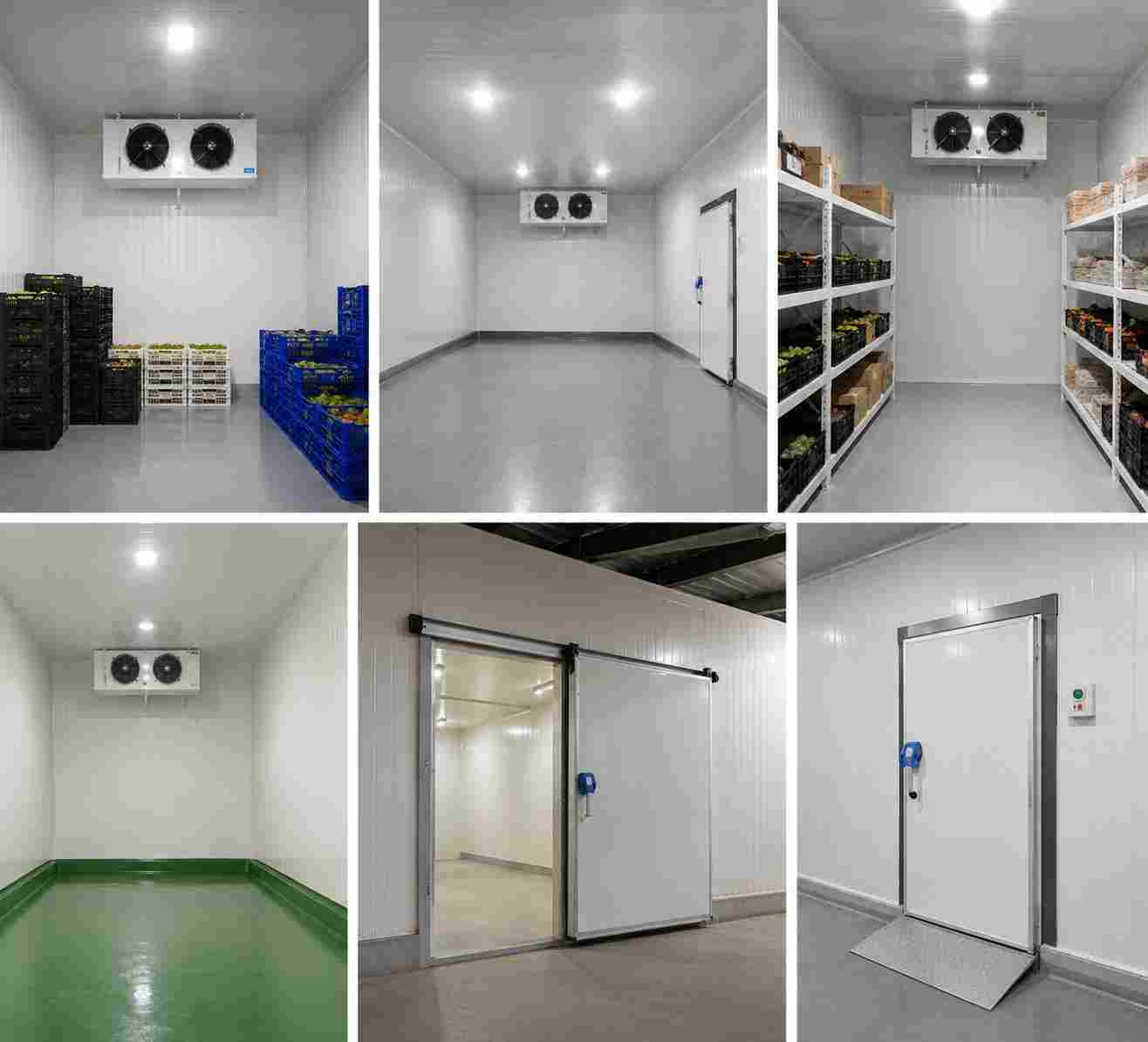
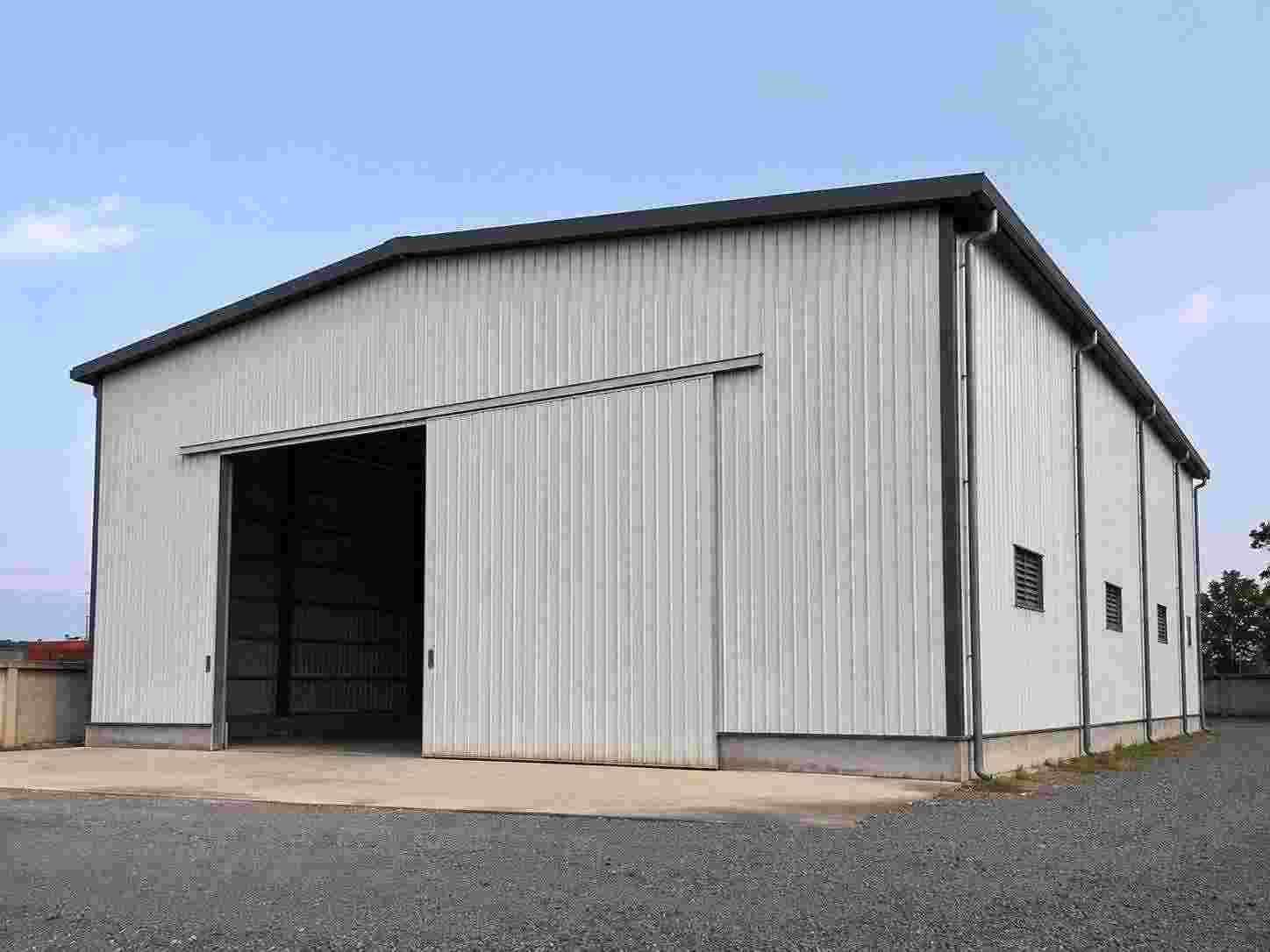
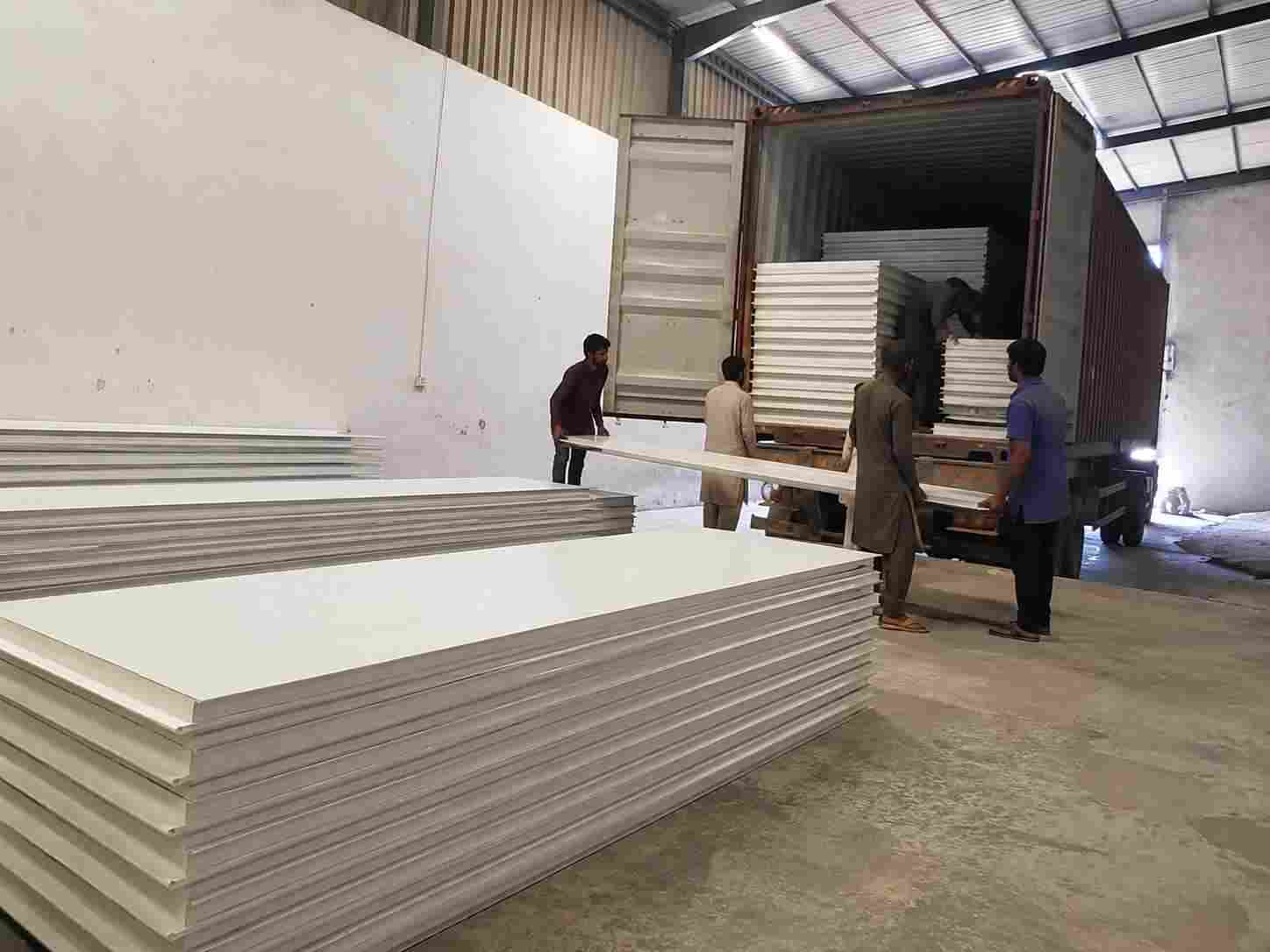
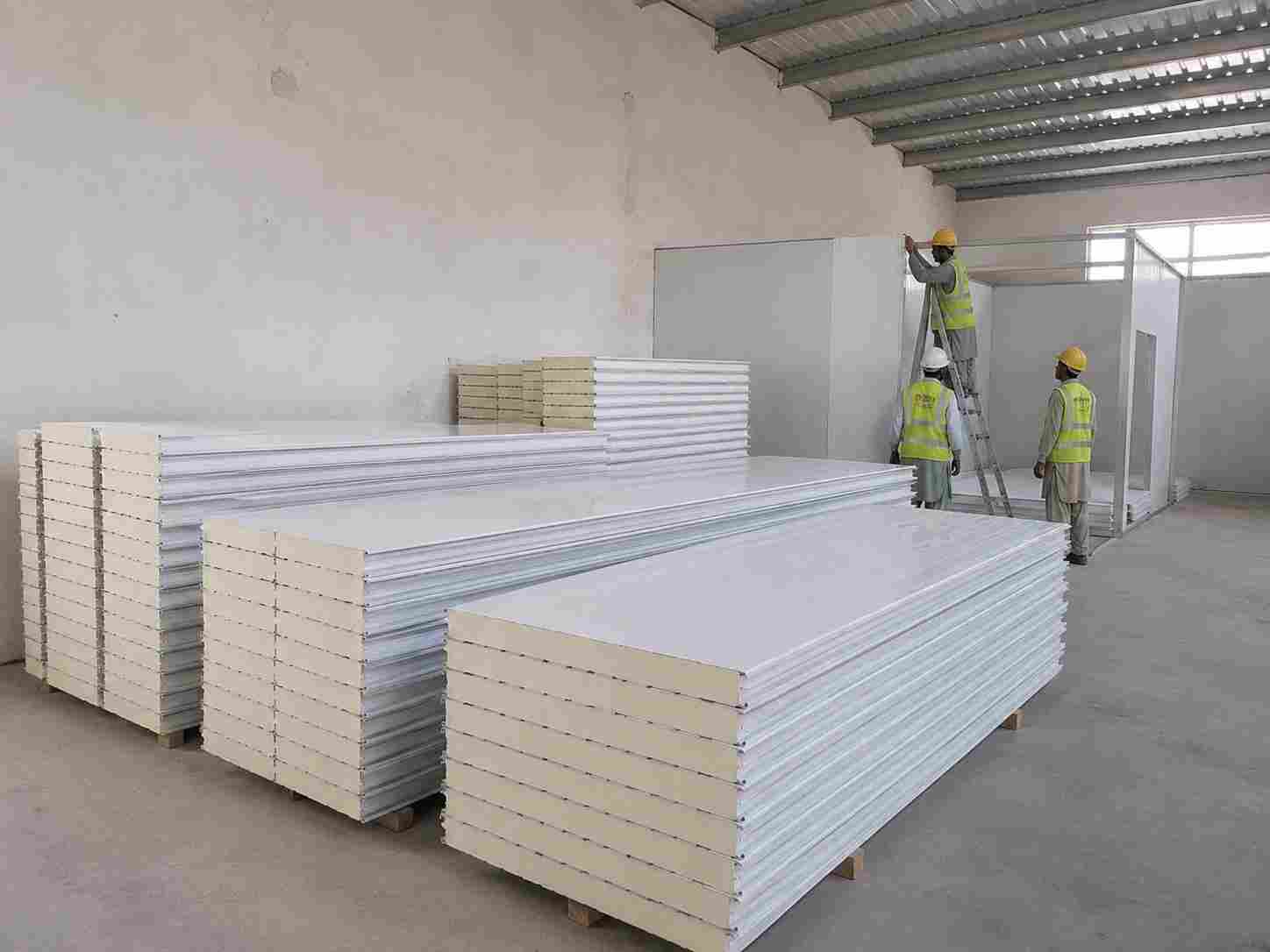
📸 Recent Physical Deployments by ColdMatrix
📱 Discuss Your Industrial Project Locally
Need urgent technical verification, physical material samples delivered to your office, or a verified commercial invoice layout? Skip the automated queue and connect directly with our head engineering office in Karachi.
Product Entry Temperature – The Hidden Load
One of the most overlooked factors in cold storage design is the temperature of the product when it enters the room. If frozen products such as meat, fish, or ice cream are shifted from a blast freezer at -42°C to -10°C, the cold room can maintain the required temperature easily because the product is already frozen. But if the same product arrives from outside at 35°C to 40°C, the cooling system must work much harder to bring it down to the required storage temperature. This increases the cooling load and energy consumption.
Practical Rule: Always consider the entry temperature of the product when sizing the refrigeration unit. Products coming from outside need more cooling capacity than products coming from another freezer.
Cooling Requirement Depends on Product Type
Different products require different storage temperatures. For example:
- Ice cream: -15°C to -25°C
- Frozen meat: -18°C
- Seafood: -25°C
- Dairy: +2°C
- Fruits & vegetables: +1°C to +8°C
- Bananas: +15°C to +20°C
The sandwich panel thickness, floor insulation, and door quality must all be selected according to the required temperature.
Sandwich Panel & Insulation – Never Compromise
The panels must have proper thickness (75mm, 100mm, 125mm, 150mm or more), sufficient core density (40–45 kg/m³ for PUF), and correct skin thickness (0.4mm to 0.7mm depending on application). Floor insulation is equally important. For negative temperature rooms, the floor must be properly insulated using XPS, PUF board, or sandwich panels with a finishing sheet. Doors must be top quality with proper gaskets, heaters, and PVC curtains to prevent cold air loss.
Refrigeration Compressor – Choose Reliable Brands
The compressor is the heart of the cold storage system. It must be in excellent condition and properly tested before installation. Some of the most trusted compressor brands globally include Bitzer (Germany), Copeland (USA), Danfoss, and Tecumseh. In Pakistan and the Middle East, Bitzer and Copeland are the most common and trusted for cold storage projects. Never install a used or untested compressor for a critical cold room. Always verify its pressure, oil, and electrical connections before installation.
Refrigerant Gas – Globally Recommended Options
Common refrigerants for cold storage include R22 (older, widely used but being phased out due to environmental concerns), R404A (popular for freezers but being replaced due to high GWP), R448A / R449A (modern, low-GWP replacements for R404A, recommended for new installations), NH3 (Ammonia) for large industrial plants above 20 TR, and CO2 which is eco-friendly and growing in adoption. For modern cold rooms, R448A or R449A is the best choice because they are environmentally friendly and efficient.
Copper Piping & Control Panel Wiring
The refrigeration system's performance depends heavily on proper copper piping with correct diameter and insulation, clean brazing and no leaks, proper control panel wiring with safety devices, and correct refrigerant charge. Any weakness in piping or wiring can lead to compressor failure, poor cooling, or high energy consumption.
Indoor Unit Placement – Ideal Height
The indoor unit (evaporator) should not be installed too close to the ceiling or too low on the wall. The ideal placement is about 75% of the wall height. For example, if the cold room is 20 feet high, the indoor unit should be around 4 to 5 feet below the roof. If the room is 30 feet high, it should be placed significantly below the roof, but not near the floor. This ensures proper air circulation and uniform temperature distribution throughout the room.
Standard Best Practices (Added by ColdMatrix)
- Always add a safety factor of 15–25% on cooling load.
- Use dual compressors for critical cold rooms above 10 TR.
- Install door heaters for negative temperature rooms.
- Use PVC strip curtains on all doors.
- Provide proper drainage for defrost water.
- Check panel sealing and vapour barrier before operation.
- Commission the system gradually — don't rush temperature pull-down.
🌡️ Cooling Load & Refrigeration Sizing: The Professional Guide
Cooling load calculation is the foundation of any successful refrigeration project. It determines the size of the compressor, evaporator, and condenser required to maintain a stable temperature inside a cold room or freezer. An undersized system will fail to reach the set point, while an oversized system will cycle too frequently, wasting energy and shortening equipment life. This guide explains the key concepts behind our cooling requirement calculator.
1. What Is Cooling Load?
Cooling load is the total amount of heat energy that must be removed from a space per unit time, measured in BTU/hr, kW, or tons of refrigeration (TR). It is the sum of several heat sources:
- Transmission Load: Heat flowing through walls, roof, and floor due to temperature difference between inside and outside.
- Product Load: Heat released by products as they cool from entry temperature to storage temperature. For freezers, this includes latent heat of freezing.
- Infiltration Load: Warm air entering through door openings and gaps. Frequent door openings significantly increase this load.
- Equipment Load: Heat from electric motors, lights, fans, and people working inside.
2. Understanding the Units: BTU/hr, kW, and TR
- BTU/hr (British Thermal Units per hour): Common in North America. 1 TR = 12,000 BTU/hr.
- kW (Kilowatt): Used internationally. 1 TR = 3.517 kW.
- TR (Ton of Refrigeration): The cooling required to freeze 1 ton of water into ice in 24 hours. It's the standard unit for commercial refrigeration.
Our calculator automatically converts between these units to give you a clear picture.
3. Insulation: The Key to Reducing Load
Insulation is your first line of defense against heat gain. The thicker the insulation, the lower the transmission load. For cold rooms, PUF/PIR sandwich panels are recommended:
- Chillers (0°C to +8°C): 75–100mm panels
- Freezers (-15°C to -25°C): 125–150mm panels
- Blast Freezers (-30°C to -40°C): 150–200mm panels
Remember: each additional 25mm of PUF insulation typically reduces energy consumption by 8–12%.
4. Door Usage and Infiltration
Every time a door opens, warm, moist air enters. This is often the largest variable in cooling load calculation. Our calculator uses air changes per hour (ACH) to estimate infiltration:
- Low usage: 0.5 ACH
- Medium usage (standard commercial): 1.0 ACH
- Heavy usage (forklift traffic): 1.8 ACH
For freezers, always install door heaters and PVC strip curtains to minimize infiltration.
5. Product Load: The Hidden Factor
Products entering a cold room bring heat with them. The amount depends on product type, entry temperature, and daily quantity. For frozen products, extra energy is needed for latent heat of freezing. Our calculator allows you to enter daily product load for accurate sizing.
6. Safety Factor & Redundancy
Always include a safety factor of 15–25% to account for aging equipment, unexpected door openings, or future expansion. For critical storage (pharma, high-value), consider a redundant dual compressor setup. Our calculator supports this with a single checkbox.
7. Real-World Example: 20ft × 40ft × 15ft Freezer in Karachi
Let's design a frozen meat storage room in Karachi, where ambient reaches 42°C. Room temperature: -20°C.
- Volume: 12,000 ft³
- Temperature difference: 62°C
- Suggested panel thickness: 125mm PUF/PIR
- Estimated cooling load: 12–15 TR
- Recommended unit: Dual compressor split system with R448A
8. Common Mistakes to Avoid
- Underestimating infiltration: Always add door heaters and strip curtains.
- Ignoring floor insulation: Cold room floors need minimum 100mm insulation.
- Using wrong safety factor: New installations age; compressor performance drops 5–10% in first 5 years.
- Not considering product entry temperature: Products from outside need more cooling capacity.
- Choosing cheap refrigerants: R448A/R449A are more efficient and eco-friendly than legacy R404A.
9. Extended FAQ – Cooling Load Deep Dive
Q: What is the difference between a chiller and a freezer?
A: Chillers maintain above 0°C; freezers maintain below 0°C. Freezers need thicker insulation, door heaters, and floor insulation.
Q: How often should I defrost?
A: Modern systems auto-defrost every 6–8 hours. Manual only on older systems.
Q: What TR means?
A: 1 TR = 12,000 BTU/hr = 3.517 kW. It's the cooling required to freeze 1 ton of water into ice in 24 hours.
Q: Can I add more rooms to an existing system?
A: No, each room should have its own evaporator and dedicated capacity.
Q: How do I reduce my electricity bill?
A: Clean condensers, replace worn gaskets, install strip curtains, and maintain proper insulation. Can reduce bills by 15–25%.
Q: What's the ideal evaporator placement?
A: About 75% of wall height for uniform air distribution.
✅ This guide, combined with our free calculator, gives you a complete understanding of cooling load estimation.