🧱 ColdMatrix Sandwich Panel Calculator
Estimate panel weight, quantity, and total cost — with flexible units for any project worldwide. Supports PUF, PIR, EPS, and Rockwool cores. 🌍
1. 📐 Project Area
2. 🧱 Panel Specifications
3. 🔥 Fire Safety Regional Compliance
4. 🏗️ Steel Sheets & Core Density
5. 💰 Pricing
🏭 Factory-Direct PU/PIR Sandwich Panels & Cold Room Construction in Pakistan
While our digital engineering suite supports global standards, ColdMatrix Advanced Solutions operates a state-of-the-art manufacturing infrastructure supplying PU/PIR Sandwich Panels across Karachi, Lahore, Islamabad, and Balochistan. Whether you are planning a +4°C commercial pharmaceutical cold store or a -25°C deep-freeze industrial warehouse, our panels strictly comply with structural thermal demands.
- Local Optimization: Designed to withstand extreme ambient temperatures up to 50°C in industrial hubs like Landhi, Korangi, and Port Qasim.
- Cost Advantage: Save on international freight and import duties by sourcing premium, international-grade panels engineered right here in Karachi.
- Global Reach: Export-grade panels shipped to the Middle East, Africa, Central Asia, and Europe with full documentation and compliance reports.
📸 Recent Physical Deployments by ColdMatrix
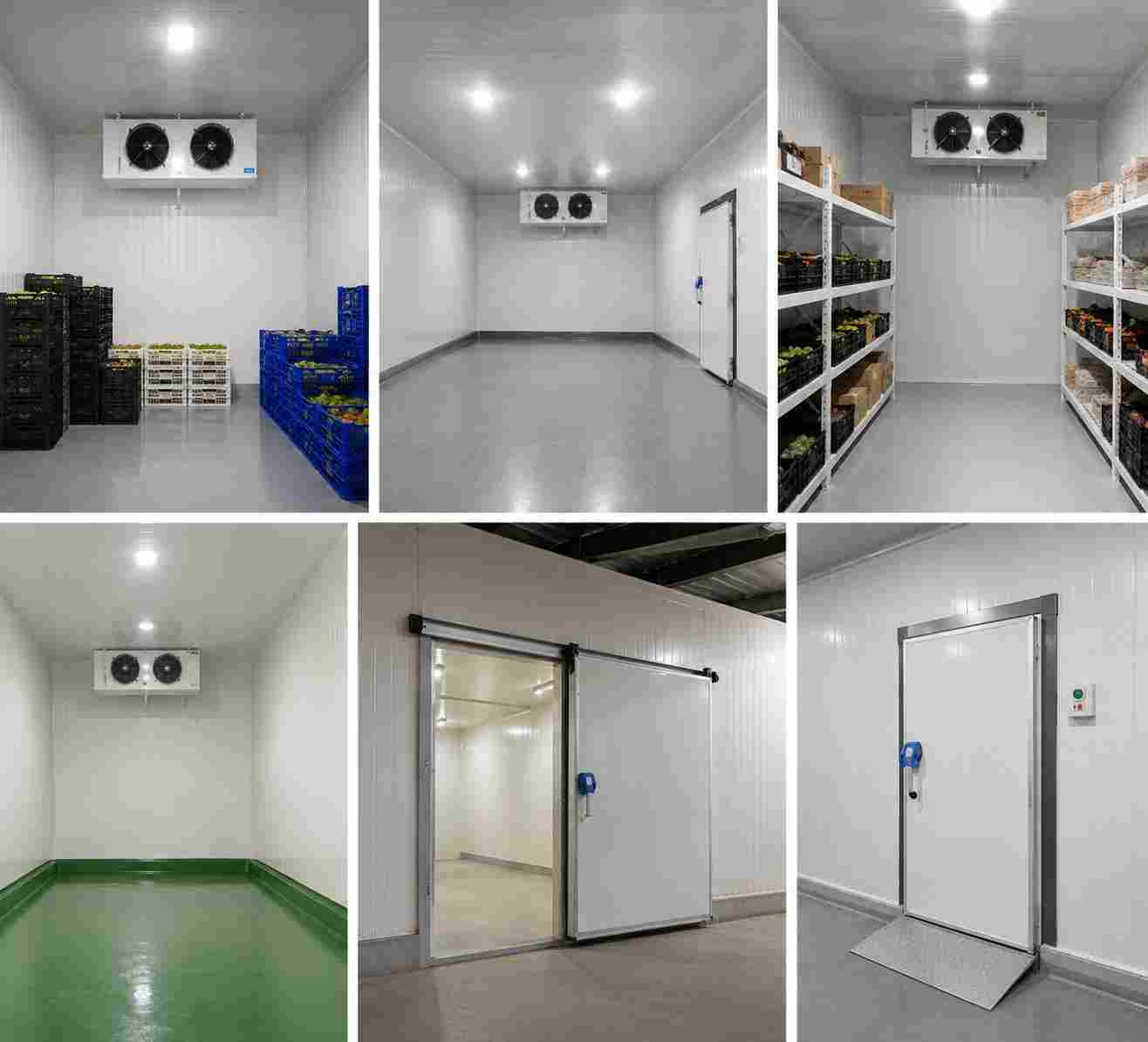
🧊 Cold Storage Installation
Multiple commercial cold storage facilities installed in Karachi. Operational temperature-controlled units for fruits, vegetables, and perishable goods.
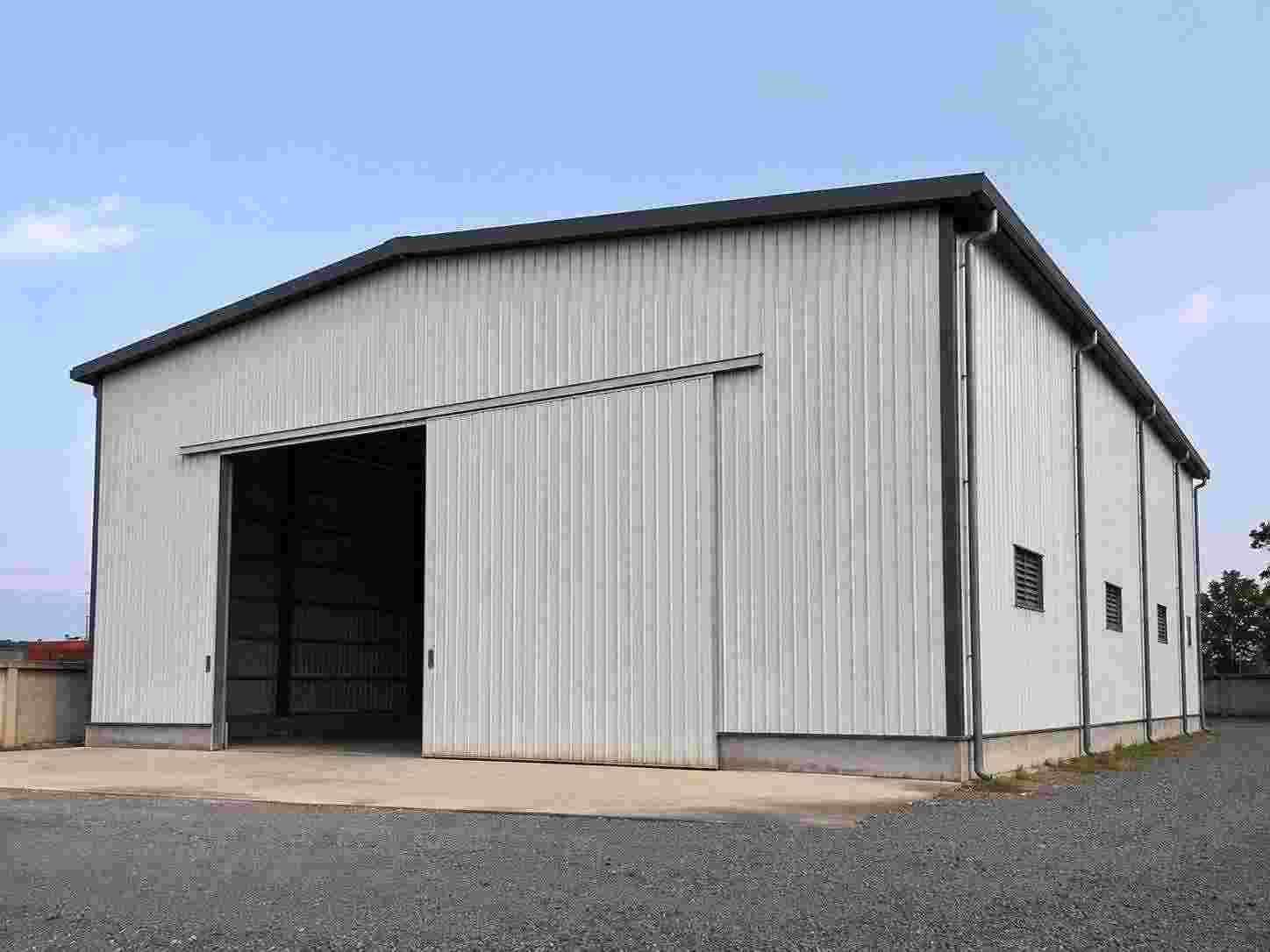
🏗️ PEB Warehouse Structure
Turnkey logistics warehouse with 80-foot clear span PEB structural steel configuration — Hub, Balochistan. Completed installation.
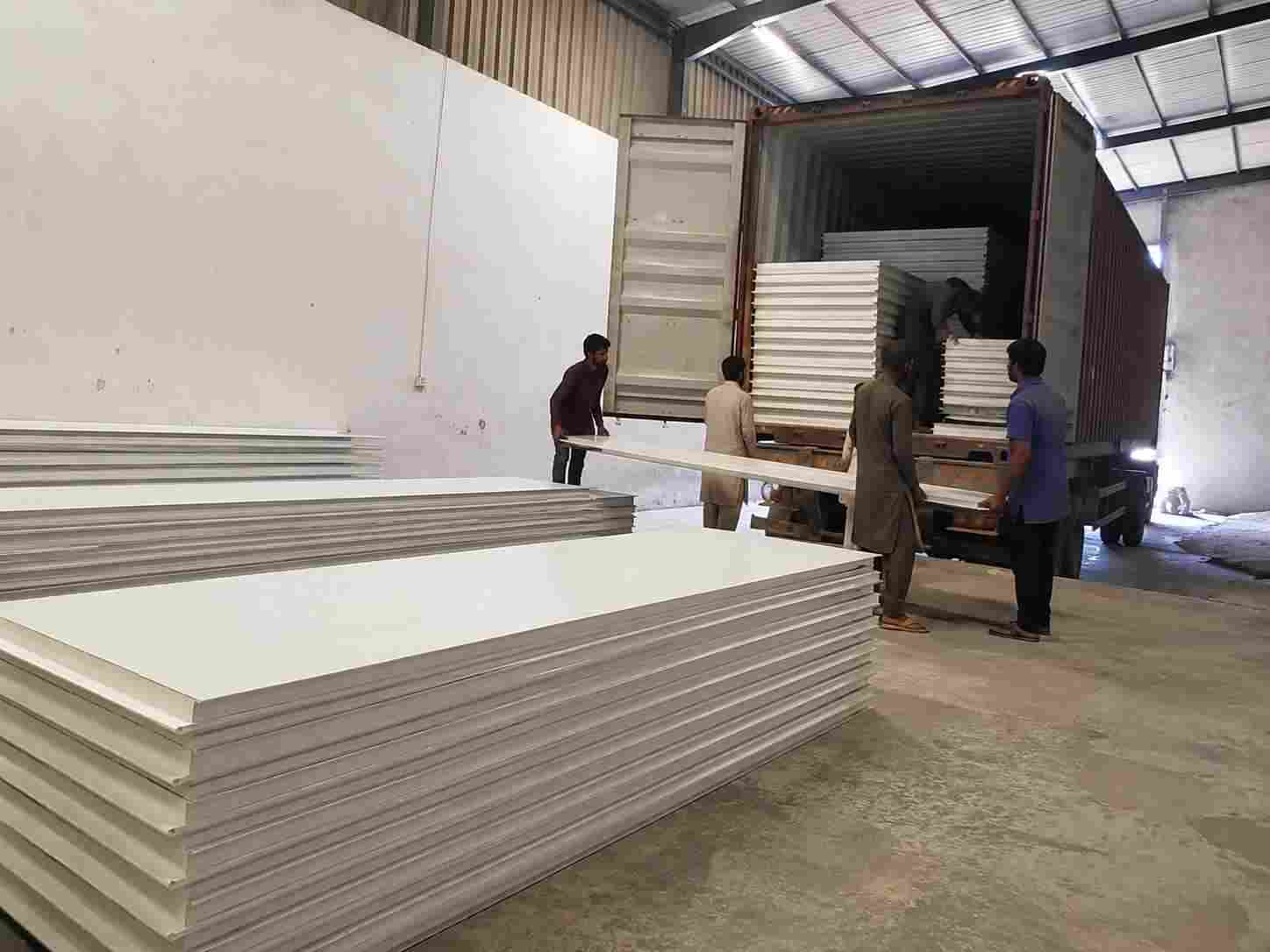
📦 Sandwich Panel Supply
Bulk sandwich panel supply delivered to Lahore. Premium insulated panels provided for client's construction team to install.
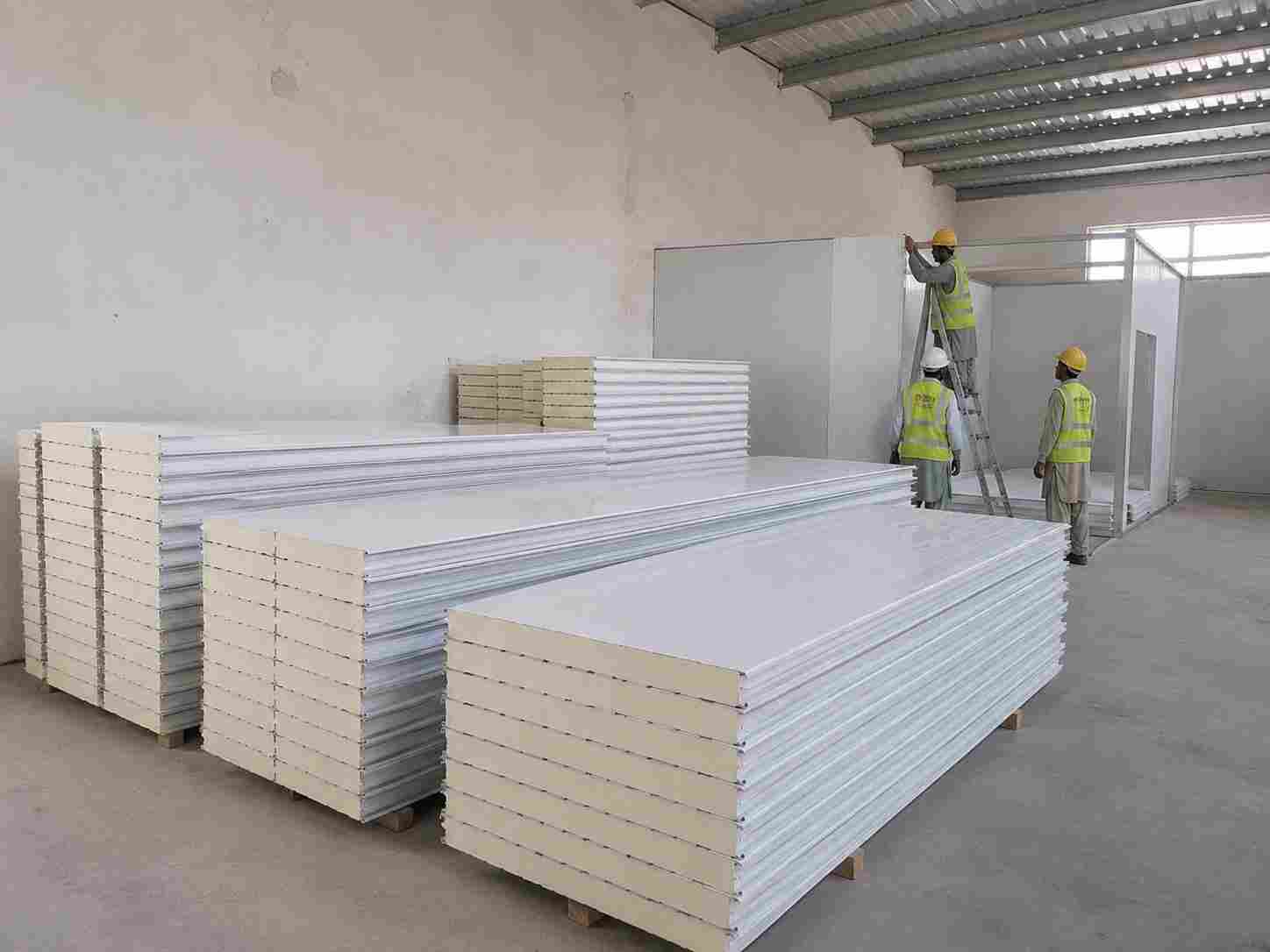
📦 Sandwich Panel Supply
Sandwich panel materials supplied to Islamabad. Trusted by contractors and builders for quality insulated panel solutions.
📱 Discuss Your Industrial Project Locally
Need urgent technical verification, physical material samples delivered to your office, or a verified commercial invoice layout? Skip the automated queue and connect directly with our head engineering office in Karachi.
🧱 The Complete Sandwich Panel Engineering Guide
Sandwich panels are the backbone of modern insulated construction. From small walk-in freezers to massive cold storage warehouses, clean rooms, and prefab homes, these composite panels provide insulation, structural strength, and weather protection in a single prefabricated component. Understanding how they're made, specified, and installed separates professional contractors from amateurs — and this guide walks you through every variable that matters.
What Exactly Is a Sandwich Panel?
A sandwich panel is a prefabricated building material made of two outer steel sheets bonded to a rigid insulating core — typically PUF (Polyurethane Foam), PIR (Polyisocyanurate), EPS (Expanded Polystyrene), or Rockwool. The outer sheets are usually PPGI (Pre-Painted Galvanized Iron), stainless steel, or aluminium. This "sandwich" structure delivers excellent thermal insulation, high strength-to-weight ratio, and rapid on-site installation. The most common effective coverage width for cold storage panels is 1190 mm, allowing for modular installation and minimal waste.
How Sandwich Panels Are Manufactured
The manufacturing process begins with steel coils — typically PPGI — that are roll-formed into the desired profile. The two steel sheets are fed into a continuous production line where liquid polyurethane foam is injected between them. The foam expands and cures, bonding to both steel surfaces and creating a single solid composite panel. The continuous process allows panels to be cut to any length from 2 meters up to 16 meters. Panel width is determined by the original coil width and profile: a standard 1220 mm coil, after roll-forming, typically yields an effective coverage width of 1190 mm.
Core Materials: PUF vs PIR vs EPS vs Rockwool
- PUF (Polyurethane Foam): The most common choice. Thermal conductivity λ ≈ 0.022 W/mK, density 40–45 kg/m³. Excellent insulation at moderate cost. Suitable for most cold rooms from -35°C to +25°C.
- PIR (Polyisocyanurate): Better fire resistance and slightly better insulation (λ ≈ 0.020 W/mK). Costs 15–20% more than PUF. Recommended for high-value projects, pharmaceutical storage, and strict fire codes (GCC, Europe, North America).
- EPS (Expanded Polystyrene): The cheapest option (λ ≈ 0.035 W/mK). Requires thicker panels for the same insulation. Only for chilled rooms above 0°C where cost is the primary driver.
- Rockwool (Mineral Wool): Best fire rating (non-combustible). Heavier, more expensive, and offers the highest fire safety. Used in high-rise buildings, industrial high-hazard areas, and where FM Approval is mandatory.
Panel Profiles & Why Effective Width Matters
Sandwich panels come in several profiles for different applications:
- Flat: Smooth surface, used for interior walls and ceilings.
- Low Rib / Micro Rib: Slight ribs for added strength and aesthetics. Common for wall panels.
- Corrugated: Deep ribs for roof panels, providing better water runoff and structural strength.
- Concealed Fix: Hidden fasteners for a clean, premium look.
The single most common mistake in sandwich panel ordering is using the full sheet width (1220 mm) instead of the effective coverage width (1190 mm). After roll-forming into a profiled panel, the steel shrinks by 20–30 mm. Over a 100-meter wall, that 30 mm difference means the difference between ordering 84 panels and 86 panels — a costly under-order that delays your project. The formula is simple: Panel Count = Total Area ÷ (Effective Width × Panel Length). For a wall 100 m long × 6 m high (600 m²), with 3 m panel length and 1.19 m effective width: Panel Count = 600 ÷ (1.19 × 3) = 168 panels. Always add 3–5% wastage for cuts and corner waste. Our calculator uses the correct effective width of 1190 mm in all calculations — never the raw coil width.
Thermal Performance: Understanding U-Value and R-Value
Insulation performance is measured by the panel's U-value (thermal transmittance, lower is better) or R-value (thermal resistance, higher is better). Typical values for PUF panels:
- 50 mm PUF: U-value ≈ 0.44 W/m²K
- 75 mm PUF: U-value ≈ 0.29 W/m²K
- 100 mm PUF: U-value ≈ 0.22 W/m²K
- 150 mm PUF: U-value ≈ 0.15 W/m²K
- 200 mm PUF: U-value ≈ 0.11 W/m²K
For freezer applications (-15°C to -25°C), 125–150 mm panels are standard. For chillers (+2°C to +5°C), 75–100 mm is usually sufficient. In extremely hot climates — such as the Middle East, Pakistan, and India — always go one step thicker than the minimum recommendation.
Steel Skin vs Core Weight: How Panel Weight Is Calculated
Sandwich panel weight is the sum of three components: top steel skin + bottom steel skin + foam core. Steel skins are typically 0.4–0.6 mm thick PPGI, with density of approximately 7,850 kg/m³. For a 0.5 mm skin, weight per square meter is 3.93 kg/m². Two skins = 7.86 kg/m². Core weight depends on density and thickness: standard PUF core is 40 kg/m³, so a 100 mm core weighs 4.0 kg/m². Total panel weight for 100 mm PUF = 7.86 + 4.0 = 11.86 kg/m². For a 150 mm PIR panel (density 40 kg/m³): 7.86 + 6.0 = 13.86 kg/m². This weight matters for structural design — roof panels need purlins spaced to handle the dead load, and wall panels need proper base support. Our calculator computes both steel and core weight separately so you can verify the manufacturer's datasheet.
Fire Safety & Regional Compliance
Fire safety regulations for sandwich panels are not universal. What passes in one region may fail inspection in another:
- Middle East (GCC): Civil Defense approvals in Dubai, Riyadh, and Doha demand FM-Approved PIR panels or Rockwool core panels with a minimum 2-hour fire rating. Standard PU panels are often rejected for high-rise or high-occupancy projects.
- North America & Europe: Projects must comply with ASTM E84 (USA) or EN 13501-1 (Europe). PIR panels with Class B-s1, d0 rating are recommended. Avoid EPS in freezer applications — it melts and drips, spreading fire.
- South Asia: Local building codes typically accept PUF panels, but for pharmaceutical or export-oriented facilities, PIR is strongly recommended.
- Oceania: AS/NZS standards require PIR or Rockwool for high-hazard installations.
Our calculator automatically recommends the appropriate core material and standard based on the country you select. Always ask your panel manufacturer for third-party fire test reports — a panel that meets EN 14509 for structural performance may not meet fire code requirements for your specific building classification.
Panel Joints: Cam-Lock vs Tongue-and-Groove
Modern panels use one of two joining systems. The cam-lock system — the most common for cold storage — integrates a locking mechanism that pulls panels tightly together, compressing a built-in gasket for an airtight seal. Fast and thermally superior. The tongue-and-groove system slides panels together and is often used for wall panels in less demanding applications. For freezer applications, always choose cam-lock with integrated gaskets to prevent moisture ingress and ice formation at panel joints.
Installation Best Practices
- Level foundation: Panels must sit on a perfectly level surface. Uneven floors cause misalignment and seal failures.
- Start from a corner: Always begin installation from a corner and work outward.
- Use proper lifting equipment: Panels are heavy. Use suction cups or lifting slings — never lift by the edges alone.
- Seal all joints: Apply approved sealant at all panel-to-panel and panel-to-floor junctions to prevent thermal bridging.
- Handle carefully: Dropping or impacting panels dents the steel skin and damages the foam core.
- Cover cut edges: Exposed foam at cut edges absorbs moisture. Always seal with manufacturer-approved edge treatment.
Real-World Example: 40 ft × 30 ft × 12 ft Cold Room
Suppose you need to panel a cold room with four walls each 40 ft × 12 ft and a roof 40 ft × 30 ft, using 1190 mm effective width panels with 12 ft lengths:
- Wall area: 2 × (40×12) + 2 × (30×12) = 1,680 ft²
- Roof area: 40 × 30 = 1,200 ft²
- Total area: 2,880 ft² + 3% wastage ≈ 2,966 ft²
- Estimated panels: ~25–30 panels depending on orientation
Common Mistakes to Avoid
- Forgetting wastage: Always add 3–5% for cuts and corner waste.
- Using the wrong effective width: 1220 mm coil ≠ 1190 mm coverage.
- Ignoring panel orientation: Panels can be installed vertically or horizontally; each has different joint and support requirements.
- Choosing the wrong core: EPS is unsuitable for freezers — it causes condensation and fire risk.
- Underestimating roof support: Long roof panels need proper purlins sized for the dead load.
- Skipping PVC curtains and door heaters: These lead to energy loss and ice formation at door frames.
- Ignoring regional fire safety: Using non-compliant panels can lead to project rejection or insurance issues.
Frequently Asked Questions
Q: What is the standard width of a sandwich panel?
A: The full steel coil is typically 1220 mm (4 ft). After profiling, the effective coverage is approximately 1190 mm. Always use the effective width — not the raw coil width — for quantity calculations.
Q: Which core is better — PUF or PIR?
A: PIR is technically superior for fire resistance and slightly better for insulation. PUF is more affordable and works well for most cold rooms. For export, pharmaceutical, or GCC projects, PIR is strongly recommended.
Q: Can I use sandwich panels for the floor?
A: Yes. In negative-temperature rooms, sandwich panels can be laid directly on the floor with a finishing sheet such as checker plate or aluminium on top. XPS boards are also commonly used for under-floor insulation.
Q: How many panels come in a truckload?
A: A standard 40 ft container holds approximately 400–600 panels depending on thickness and packing — roughly 600–800 m² of coverage.
Q: What's the lifespan of a sandwich panel?
A: 15–25 years with proper installation and maintenance. Steel skins may need repainting after 10–15 years in humid or coastal environments.
Q: Are sandwich panels fireproof?
A: No panel is fully fireproof. PIR has better fire resistance than PUF. Rockwool-core panels offer the best fire rating. Always check local fire codes.
Q: What's the maximum panel length available?
A: Most manufacturers produce panels up to 12–16 meters. Longer panels reduce joints but are harder to transport and install.
Q: What warranty should I expect?
A: Standard warranty is 10 years on panel delamination and 2–5 years on PPGI coating. Always get warranty terms in writing.
Q: Can I install panels myself?
A: For small projects (under 50 m²), experienced DIY installers can manage. For commercial cold rooms, always use certified installers — improper installation voids warranty and compromises performance.